
Introduction: Understanding Morocco’s Imperial Legacy
Morocco’s imperial cities—Marrakech, Fes, Meknes, and Rabat—represent the political, cultural, and spiritual foundations of the kingdom. Each city served as a capital under powerful dynasties, shaping Morocco’s governance, architecture, scholarship, and trade networks. Today, these cities remain central to cultural tourism, offering visitors a living connection to nearly twelve centuries of history.
Exploring Morocco’s imperial cities is not merely sightseeing—it is an immersion into royal courts, religious scholarship, artisan traditions, and monumental urban design.
Marrakech: The Southern Imperial Capital
Founded in 1070 by the Almoravids, Marrakech quickly rose as a strategic imperial capital. Under the Almohads and later the Saadians, the city reached remarkable heights of architectural and political influence.
The towering minaret of the Koutoubia Mosque dominates the skyline and reflects Almohad mastery of proportion and design. Nearby, the 16th-century Saadian Tombs showcase intricate stucco, marble, and zellij tilework, representing the refinement of Saadian craftsmanship.
Another symbol of imperial grandeur is the El Badi Palace, once adorned with gold, onyx, and Italian marble. Though partially in ruins today, its vast courtyards testify to the wealth and ambition of Sultan Ahmad al-Mansur.
At the heart of the medina lies Jemaa el-Fnaa, a public square that has served as a commercial and cultural crossroads for centuries. Storytellers, musicians, and merchants continue traditions that connect modern visitors to Marrakech’s imperial past.

Fes: The Spiritual and Intellectual Capital
Founded in the 9th century, Fes became a center of religious scholarship and political authority under multiple dynasties, including the Marinids. Its medina, Fes el-Bali, is recognized as a UNESCO World Heritage Site and remains one of the most intact medieval cities in the world.
Fes is home to Al Quaraouiyine, founded in 859, widely considered the oldest continuously operating university in the world. For centuries, scholars from across North Africa and Al-Andalus traveled to Fes to study theology, law, astronomy, and philosophy.
Architectural gems such as Bou Inania Madrasa illustrate Marinid artistry through carved cedarwood, geometric tilework, and sculpted plaster. The city’s famous leather tanneries and artisan quarters preserve traditional craftsmanship that dates back hundreds of years.
Unlike Marrakech’s vibrant spectacle, Fes offers a contemplative atmosphere rooted in scholarship and spirituality.

Meknes: Monumental Vision of Moulay Ismail
Often described as the “Versailles of Morocco,” Meknes flourished in the 17th century under Sultan Moulay Ismail of the Alaouite dynasty. Determined to create a capital rivaling Europe’s great courts, he transformed Meknes into a monumental imperial city.
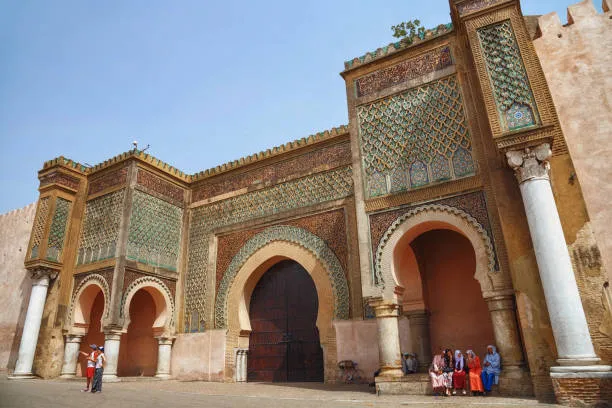
The imposing Bab Mansour gate stands as one of Morocco’s most impressive examples of ceremonial architecture, decorated with zellij mosaics and Quranic inscriptions. The Heri es-Souani granaries and royal stables demonstrate the logistical sophistication of Moulay Ismail’s reign, once housing thousands of horses.
Meknes also benefits from its proximity to the Roman ruins of Volubilis, highlighting Morocco’s layered history that extends beyond Islamic dynasties to classical antiquity.
Though quieter than Marrakech or Fes, Meknes offers a powerful sense of royal ambition and architectural scale.

Rabat: Imperial Heritage and Modern Governance
While Rabat serves as Morocco’s present-day capital, it also holds imperial significance. Founded in the 12th century by the Almohads, Rabat was envisioned as a grand imperial city.
The unfinished Hassan Tower, intended to be the world’s largest minaret, stands as a monumental reminder of Almohad aspirations. Adjacent to it lies the Mausoleum of Mohammed V, a modern royal tomb that blends traditional Moroccan design with contemporary craftsmanship.
Rabat’s Kasbah of the Udayas overlooks the Atlantic Ocean, offering a striking combination of Andalusian gardens and fortified walls. Unlike the labyrinthine medinas of Fes or Marrakech, Rabat feels more spacious and administrative, reflecting its dual identity as historic capital and modern political center.

Architectural Heritage Across the Imperial Cities
The imperial cities share distinctive architectural features shaped by Islamic, Amazigh, and Andalusian influences. Horseshoe arches, geometric zellij mosaics, carved plaster, and cedarwood ceilings appear throughout palaces and madrasas.
Urban design reflects careful planning: fortified walls, monumental gates, mosques at the city’s core, and royal palaces positioned strategically for security and visibility. Gardens such as riads symbolize the Islamic ideal of paradise, combining water, shade, and symmetry.
Each dynasty contributed stylistic innovations while maintaining continuity, resulting in a uniquely Moroccan architectural identity.

Cultural and Economic Importance
Beyond monuments, the imperial cities were hubs of governance, diplomacy, and trade. Caravans transported gold, salt, textiles, and manuscripts across trans-Saharan routes. European ambassadors negotiated treaties in royal courts. Scholars produced theological and scientific works that influenced the wider Islamic world.
Markets in these cities still operate today, sustaining artisan traditions in ceramics, leatherwork, metal engraving, and textile weaving. Tourism supports these crafts, ensuring that skills are passed to new generations.

Festivals and Living Traditions
Modern cultural events reinforce the global appeal of the imperial cities. Fes hosts the Festival of World Sacred Music, attracting performers and audiences from around the world. Marrakech organizes international film and arts festivals, bridging Moroccan culture with global creativity.
Religious celebrations, traditional music, and culinary traditions continue to animate daily life, ensuring that imperial heritage remains dynamic rather than static.
Tourism and Preservation
As visitor numbers grow, preservation efforts play a crucial role. Restoration projects, UNESCO protections, and sustainable tourism initiatives aim to balance accessibility with conservation.
Riads have been carefully renovated into boutique hotels, allowing travelers to stay within historic medinas while contributing to heritage preservation. Government strategies promote cultural tourism as a pillar of economic development

Conclusion: The Enduring Majesty of Morocco’s Imperial Cities
Morocco’s imperial cities are not relics of a distant past—they are living environments where history shapes contemporary identity. Marrakech dazzles with spectacle and color, Fes inspires with scholarship and devotion, Meknes impresses with monumental ambition, and Rabat balances heritage with modern governance.
Together, they form a cultural constellation that defines Morocco’s national character. Exploring these cities offers travelers a journey through dynasties, artistry, and enduring traditions that continue to shape the kingdom today